Mission and Need
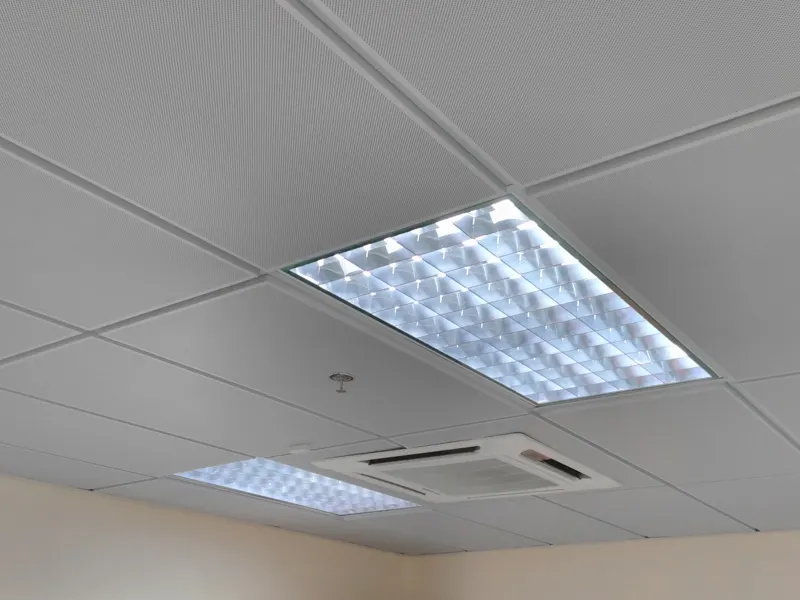
Air-conditioning and lights in the plant's offices were routinely left running in empty rooms, after hours and at weekends. In the region, air-conditioning can account for more than half of a building's electricity use.
The client needed unoccupied areas switched off automatically, without altering the existing air-conditioning units or wiring, with the manual switches staying in charge and the lights failing safe if power or the system was lost.
Our Role
SciFlair was the design authority for the whole system, working with a local partner company. Together we captured the stakeholder requirements from the client's request for quotation and a site survey. SciFlair designed, manufactured and factory-tested the hardware and firmware; our partner installed the system and provided on-site support through three phases of rollout until 2019. A single project manager was the point of contact, with acceptance signed off by the client's project manager.
What We Built
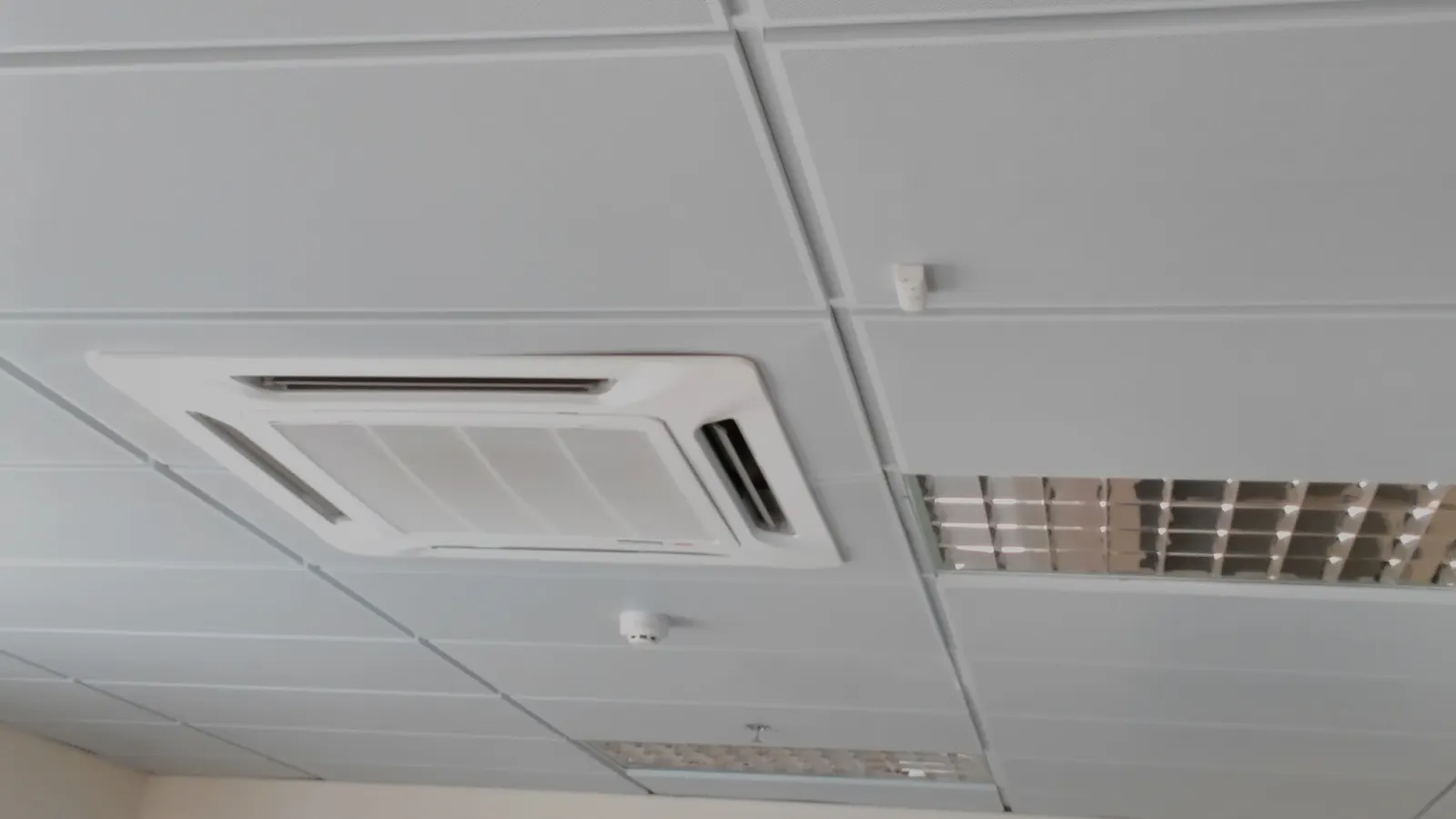
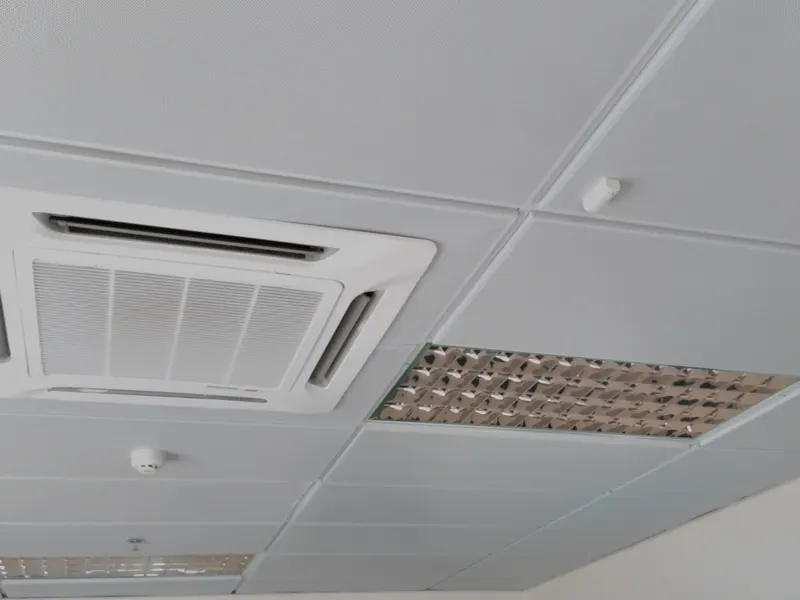
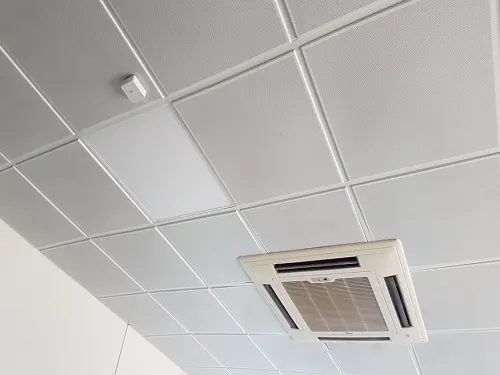
- Ceiling-mounted occupancy sensors, each covering about 5 m from a 2 m ceiling, with programmable time-outs of 10–30 minutes for lights and 15–30 minutes for air-conditioning
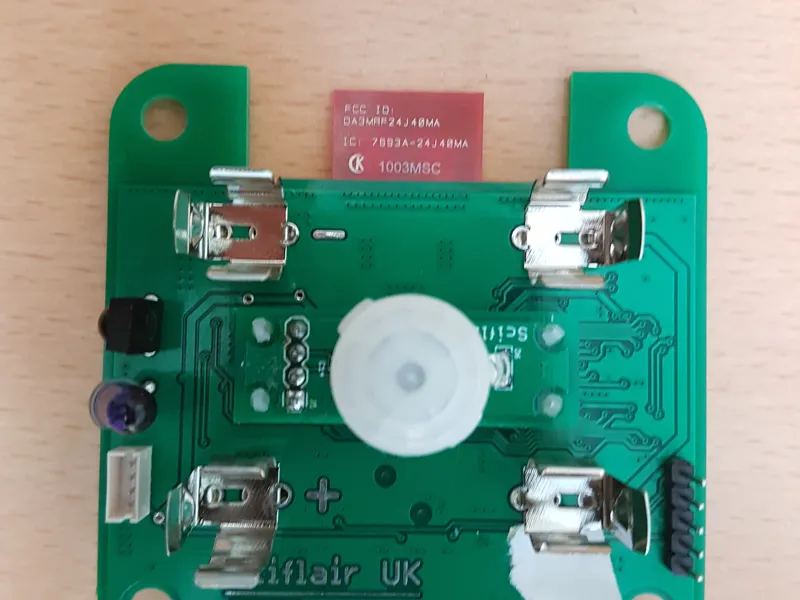
- SciFlair controller boards with 8 inputs, 6 outputs and 10 A relays to switch each lighting circuit
- Infrared transmitters that switch the existing ceiling-cassette air-conditioning units with no modification to the units
- A wired RS485 network linking the controllers, with a status interface to the site's security management system
- Fail-safe logic: manual switches remain the master, a failed module affects no other, and the system works without the site IT network
Phase one, the main administration building: 121 air-conditioning units (100 indoor, 21 outdoor) and 45 lighting circuits across two floors. Phases two and three extended the system across the plant.
How It Was Delivered
Requirements traceability
Every requirement in the client's request for quotation was answered in a compliance matrix (fully, partially or not compliant, with reasons), forming the baseline for design and acceptance.
Stage plan
Delivered in three phases from 2016 to 2019, each planned and closed as its own stage. Phase one was planned at eight weeks from order to handover, with scope changes documented and justified through change control.
Verification
Controllers, sensors and transmitters were tested in our factory before shipping.
Decision gate: primary acceptance
A first stage installed five controllers and their sensors, tested and signed off by the client before the full rollout.
Validation and transition
Full installation, a signed site acceptance test in operational use, and handover with as-installed overlay drawings.
Support
On-site support, maintenance and warranty by our local partner throughout all three phases, until 2019, backed by SciFlair engineering.
Gallery
What came next: the Electricity Saver product range
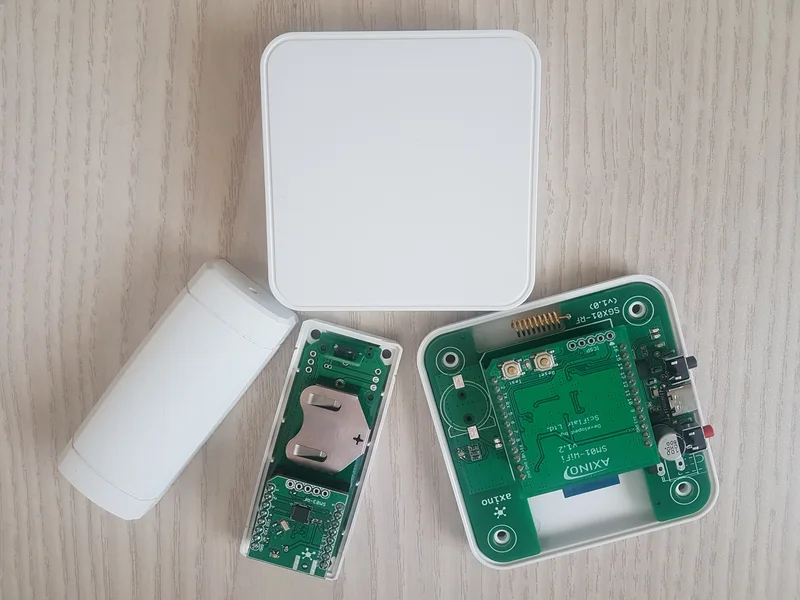
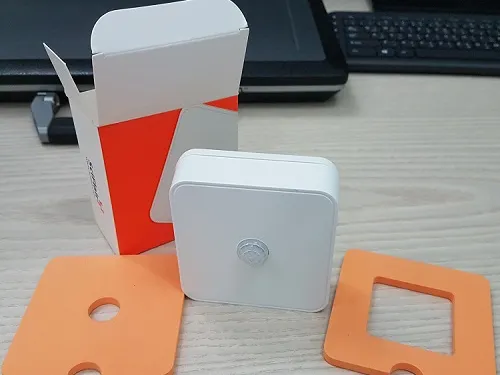
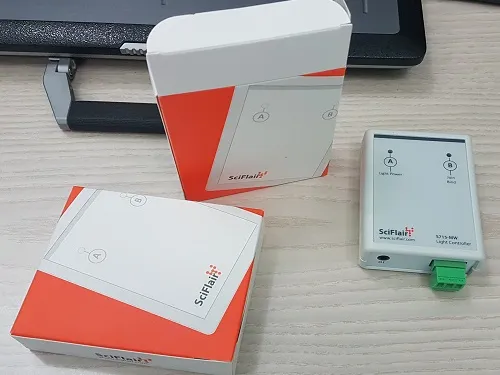
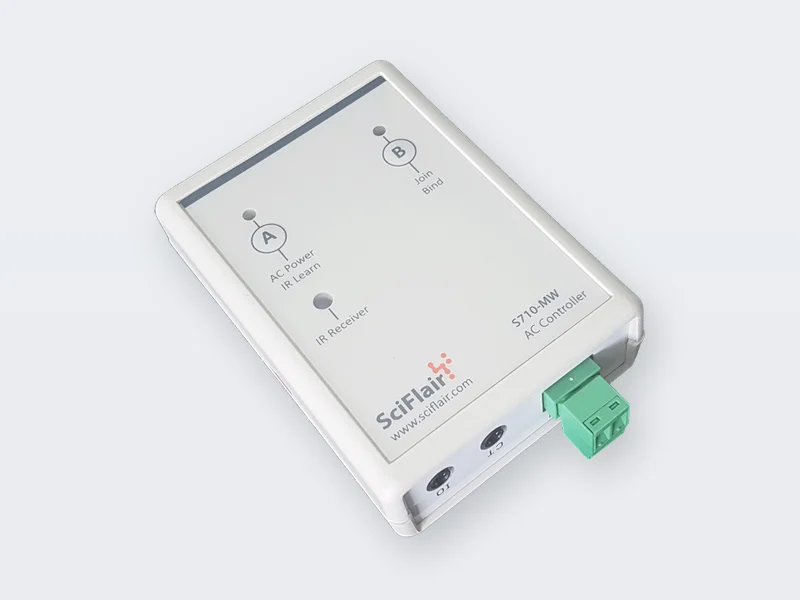
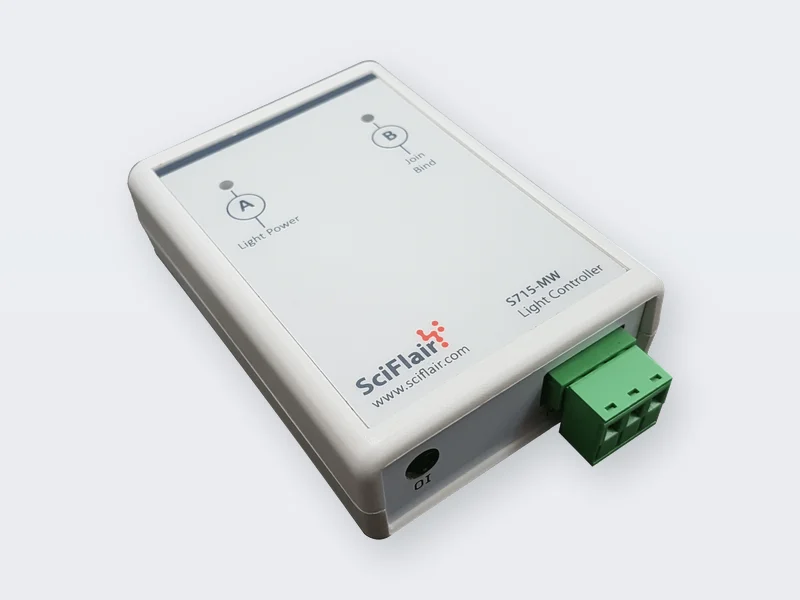
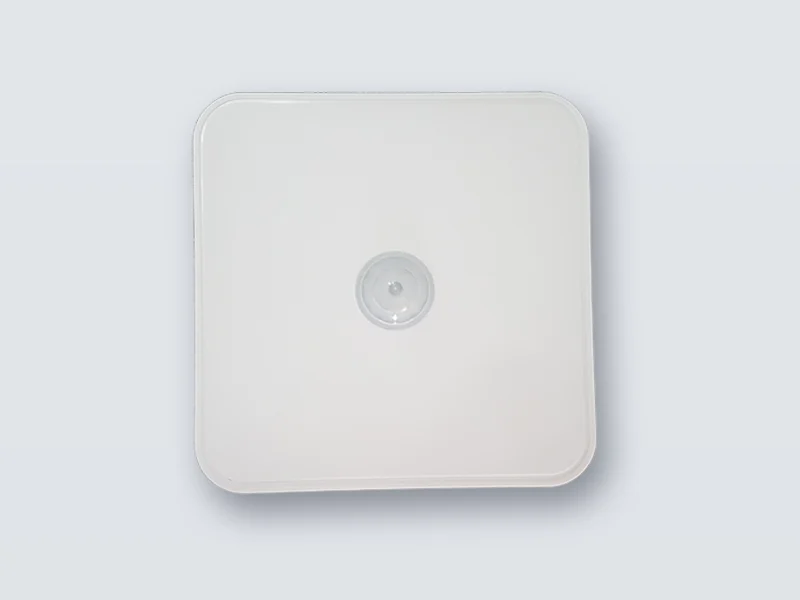
The plant project gave rise to our Electricity Saver product range: a wireless, battery-powered system that installs in minutes. It comprises the S720 motion sensor (up to 5 years on two AAA batteries), the S710 air-conditioning controller with a built-in IR learner, and the S715 light controller for loads up to 2,000 W, all on an IEEE 802.15.4 mesh with up to 100 m range and a certified radio module.