The Problem It Solves
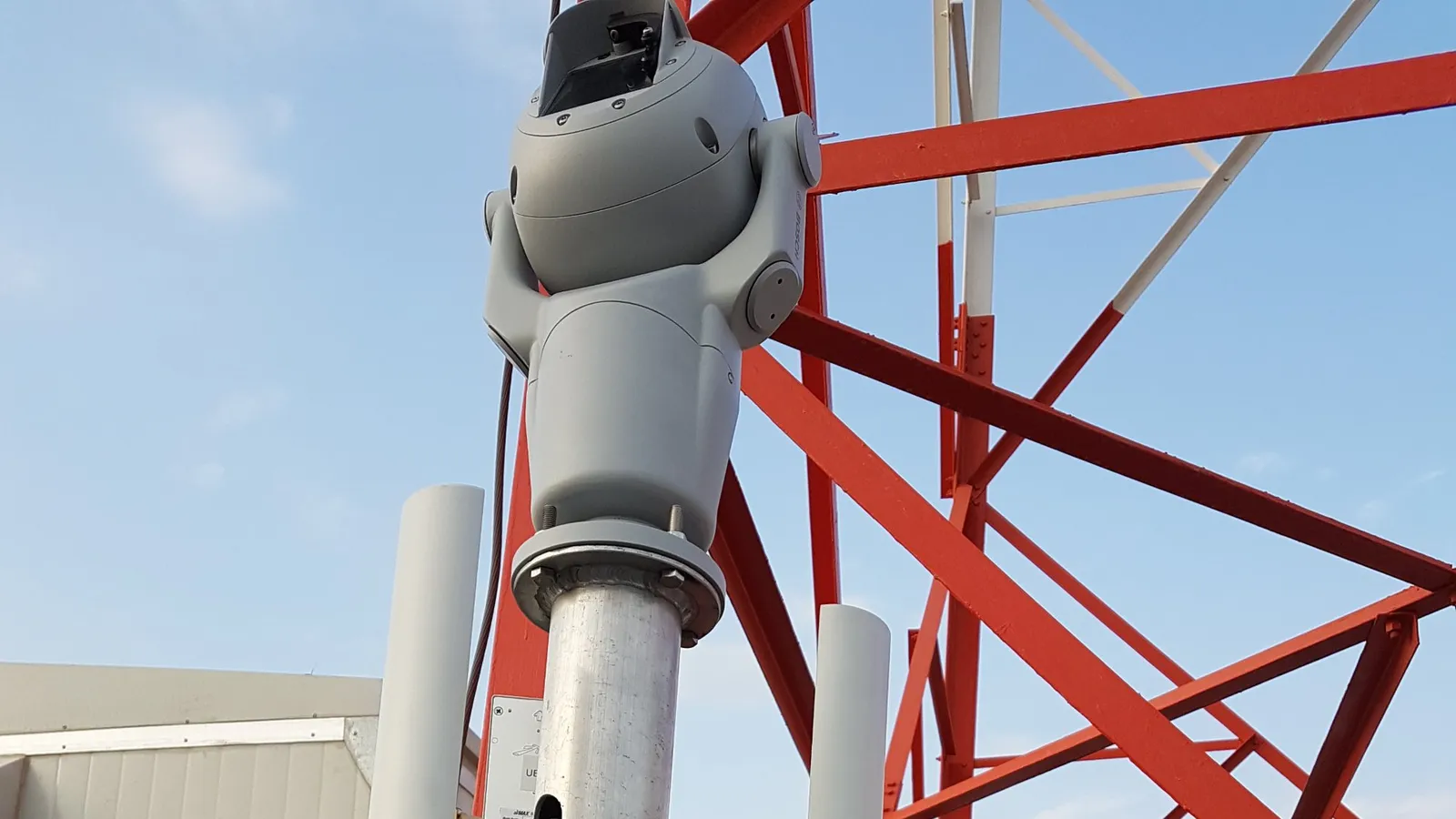
Security operators have to watch, record and control large numbers of IP cameras spread across wide areas, often over links with very different capacity: microwave, satellite, fibre, WiMax and mobile networks.
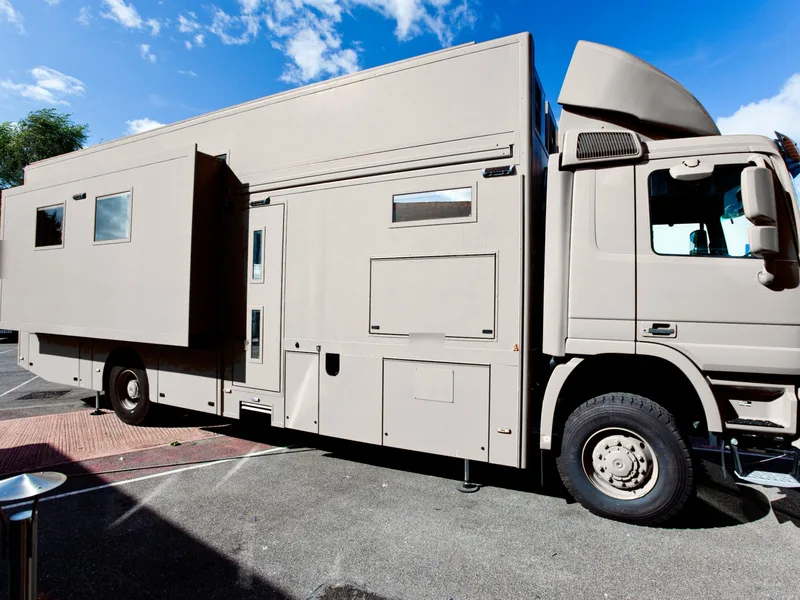
Our clients needed one system that works the same way in a fixed control room, a command-and-control vehicle or a rapidly deployed portable kit, makes the most of constrained links, and limits each operator to the cameras they are authorised to see.
Our Role
SVMS is SciFlair's own software. Years of supporting the earlier video management software in the field showed where its bottlenecks were, so we rewrote it from the ground up with a new modular architecture. We own the architecture and code.
What It Does
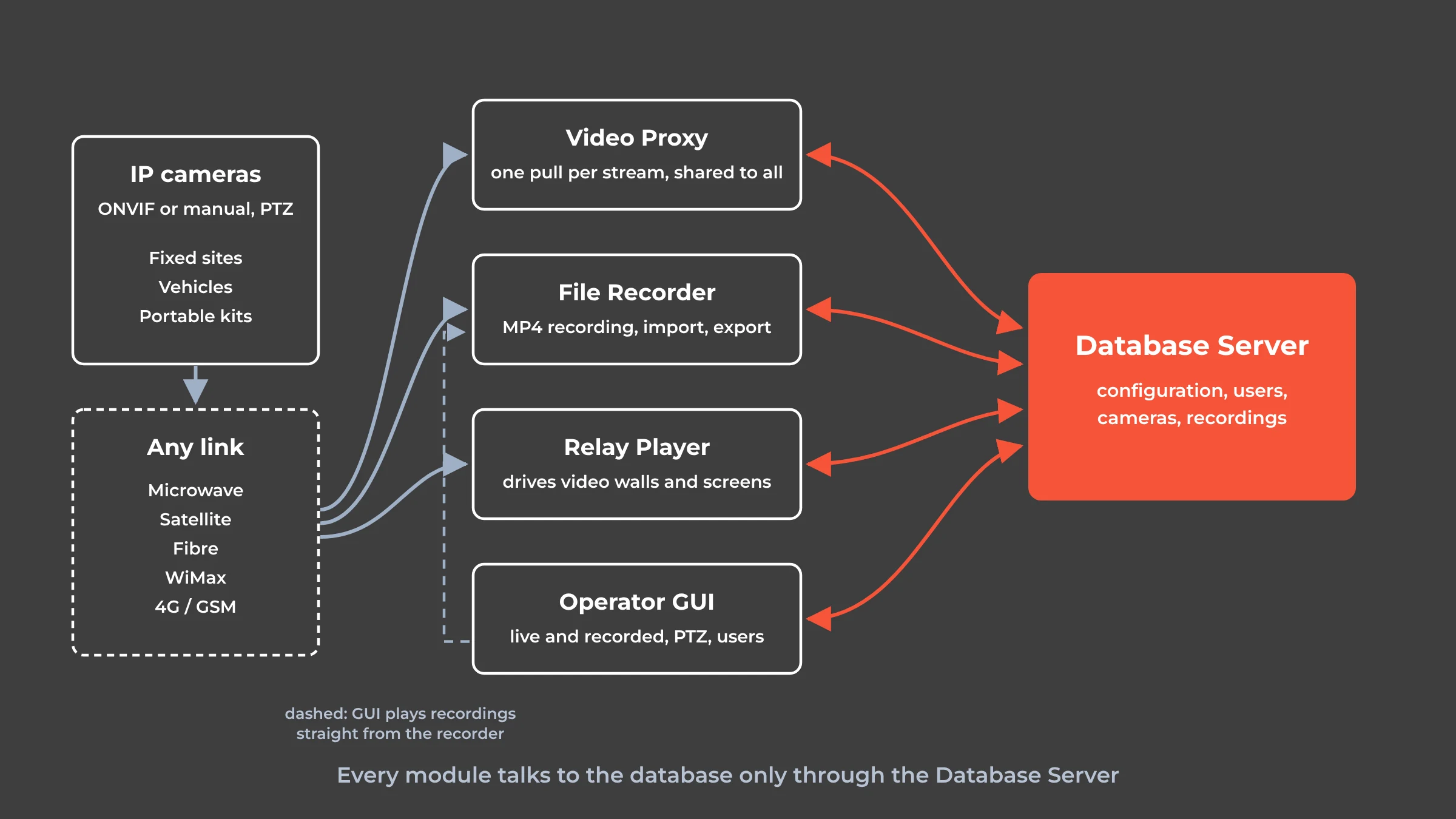
- Database Server: the single point of access to the configuration database, so every other module can run on its own machine anywhere on the network
- Operator GUI: up to 12 live or recorded views per monitor, a centred view with thumbnails, and pan, tilt, zoom, presets and auxiliary commands such as wipers for PTZ cameras
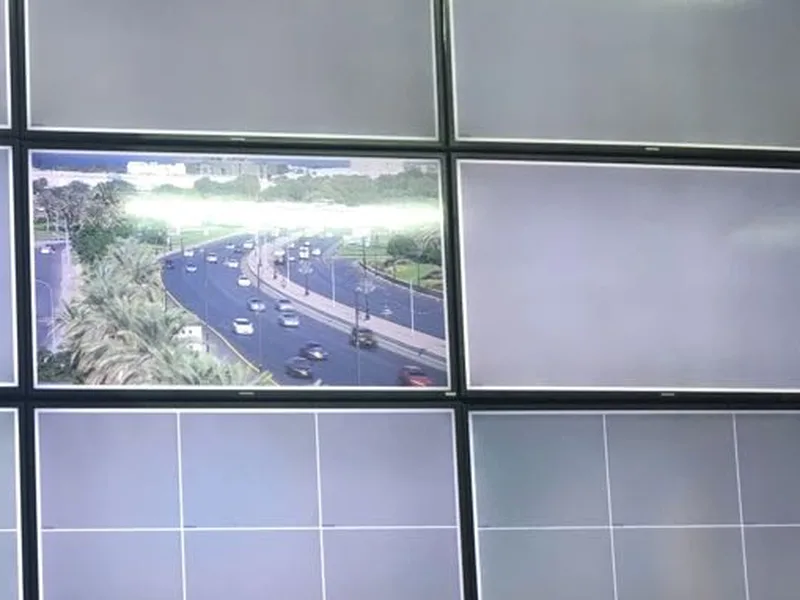
- Relay Player: drives video walls and remote displays with no user interface, configured centrally from the GUI
- Video Proxy: pulls each camera stream once over the constrained link and redistributes it locally, so more viewers do not mean more traffic on the link
- File Recorder: continuous MP4 recording in two-minute segments, with search, export to external drives and import of footage from other sources
- ONVIF camera discovery, with manual set-up for cameras that are not ONVIF-compliant
- Administrator and operator roles, with each operator limited to the cameras assigned to them
Deployed on fixed sites, in command-and-control vehicles and in portable kits, over microwave, satellite, fibre, WiMax and GSM links.
Development and Use
Architecture definition
A modular client–server architecture in which every module connects to the Database Server, so a system scales by adding recorders, proxies and wall players on separate machines.
Integration
Cameras from different manufacturers are integrated through ONVIF or manual configuration, and each is verified by assigning it to a display cell and confirming live video.
Proven in service
Deployed on the 100+ camera HD surveillance network and in mobile and portable command-and-control systems.
Next stage
The next step is to validate SVMS on current operating systems and camera models ahead of new deployments. We are looking for a partner or client to take it forward.